Does sciatica pain keep coming back no matter how much you stretch, rest, or take medication? Meyer Chiropractic helps patients with sciatica pain in Southlake identify musculoskeletal causes, improve mobility, and build a conservative plan for long-term function.
Sciatica can be frustrating because the pain often seems to improve, then returns after sitting too long, lifting something awkwardly, exercising, driving, or even sleeping in the wrong position. The key is understanding that sciatica is usually a symptom of irritation affecting the sciatic nerve, not just a random leg pain. When the underlying source is not addressed, flare-ups may continue. At Meyer Chiropractic, Dr. Robert Meyer evaluates spinal alignment, posture, movement patterns, muscle tension, and nerve irritation to help patients find practical ways to reduce recurring symptoms and return to normal daily activities.
Recurring Sciatica Pain and Sciatic Nerve Irritation
The sciatic nerve runs from the lower back through the hips, buttocks, and down each leg. When this nerve becomes irritated or compressed, it can cause pain, burning, tingling, numbness, or weakness that travels from the low back into the leg. Some patients feel symptoms mainly in the buttock or hamstring, while others notice discomfort reaching the calf or foot.
Recurring sciatica often happens when the original cause remains active. A person may feel better after rest, but if poor posture, spinal stiffness, disc pressure, muscle imbalance, or repetitive stress continues, symptoms can return. This is common for people who sit at a desk, drive long distances, lift at work, exercise with poor mechanics, or recover from an auto accident.
Lower Back Pain, Leg Pain, and Posture Problems
Posture plays a major role in sciatic nerve irritation. Sitting with rounded shoulders, a forward head position, and a tucked pelvis can place extra stress on the lumbar spine. Over time, this can affect spinal joints, discs, muscles, and nerves. Phone use, laptop work, and long hours in a car can make these patterns worse.
When the low back loses normal movement, surrounding muscles may tighten to protect the area. Tight hip flexors, weak glutes, and limited core stability can shift pressure into the lower spine and pelvis. That is one reason lower back pain treatment often needs to include more than temporary pain control. A chiropractic evaluation can help determine how posture, spinal motion, and daily habits may be contributing to recurring sciatic symptoms.
Herniated Disc, Bulging Disc, and Spinal Compression
One common source of sciatica is pressure from a bulging or herniated disc in the lumbar spine. Spinal discs act as cushions between vertebrae. When a disc becomes irritated, compressed, or displaced, it may place pressure near a nerve root that contributes to sciatic pain. Symptoms may increase when bending, lifting, coughing, or sitting for long periods.
Meyer Chiropractic offers spinal decompression therapy for certain patients with disc-related low back and leg pain. This conservative treatment is designed to gently reduce pressure on spinal structures and support improved movement. It is not appropriate for every condition, which is why a thorough evaluation is important. Digital X-rays may be recommended when needed to better understand spinal structure and guide a personalized treatment plan.
Piriformis Syndrome, Tight Hips, and Muscle Imbalance
Not every case of sciatica begins at the disc. Sometimes the sciatic nerve is irritated by tight muscles in the hip and buttock region, especially the piriformis muscle. This condition is often linked to prolonged sitting, running, cycling, weight training, or pelvic imbalance. Patients may feel deep buttock pain that travels down the leg and worsens after sitting.
Muscle imbalance can also keep sciatica returning. If one side of the pelvis is moving differently than the other, the body may compensate with tightness, weakness, or altered walking mechanics. Chiropractic adjustments, massage therapy, mobility work, and rehabilitation exercises may help improve how the spine, hips, and pelvis move together.
Common contributing factors include:
- Long periods of sitting or driving
- Poor lifting mechanics
- Weak core and glute muscles
- Tight hip flexors or hamstrings
- Repetitive sports or exercise strain
- Pregnancy and postpartum postural changes
- Auto accident injuries or whiplash-related compensation
Sciatica After an Auto Accident or Sudden Injury
Auto accidents can create spinal and soft tissue injuries that do not always feel serious right away. Adrenaline, inflammation, and muscle guarding can delay symptoms for days or even weeks. A person may initially notice mild stiffness, then later develop low back pain, hip pain, or leg symptoms consistent with sciatic nerve irritation.
Meyer Chiropractic provides evaluation and conservative care for auto accident injury recovery, including whiplash-related movement problems, spinal joint restriction, muscle strain, and nerve-related symptoms. Early assessment can be helpful because it allows the chiropractor to identify mechanical issues before they become more difficult to manage. If symptoms suggest a more serious condition, appropriate medical referral may be recommended.
Chiropractic Care, Massage Therapy, and Rehabilitation Exercises for Sciatica
Effective sciatica care often requires a combination of approaches. Chiropractic adjustments may help improve spinal and pelvic motion, while massage therapy can address tight muscles that contribute to nerve irritation. Rehabilitation exercises are used to strengthen supportive muscles, improve mobility, and reduce repeated stress on the lower back.
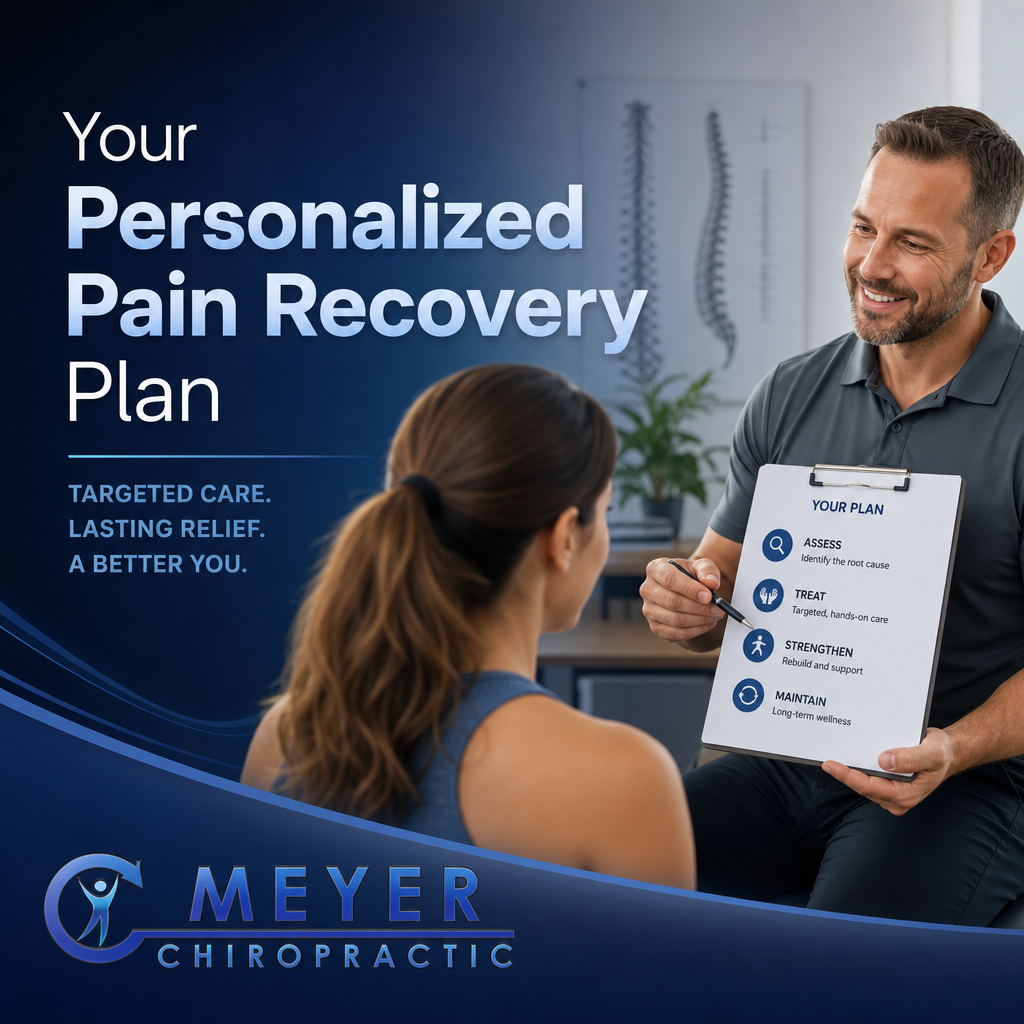
At Meyer Chiropractic, treatment plans are personalized rather than one-size-fits-all. Dr. Meyer may assess posture, spinal movement, hip function, muscle tension, daily activity demands, and previous injuries. Depending on the findings, care may include chiropractic adjustments, spinal decompression, massage therapy, stretching guidance, core stabilization, mobility exercises, and posture correction strategies.
Sciatica Relief Timelines, Mobility Goals, and Preventing Flare-Ups
Most patients want to know how long sciatica will last and what they can do to keep it from returning. The answer depends on the cause, severity, duration of symptoms, activity level, and consistency with care. Some patients respond quickly when irritation is mild. Others need more time, especially when disc involvement, chronic posture problems, or long-standing muscle imbalance is present.
A conservative plan should focus on reducing pain, improving movement, and teaching the body to tolerate daily activities again. That may include changing sitting habits, improving lifting mechanics, building core and hip strength, and addressing spinal restrictions. Patients should seek prompt evaluation if symptoms include progressive weakness, loss of coordination, numbness in the groin area, or bowel or bladder changes.
Choosing the right chiropractor matters. Look for a provider who performs a detailed evaluation, explains findings clearly, offers treatment options, and focuses on function rather than short-term symptom masking. With more than 20 years of experience, Dr. Robert Meyer helps patients understand the source of their pain and take practical steps toward better mobility.
If you’re looking for Sciatica Pain Treatment in Southlake
If you’re looking for sciatica pain treatment in Southlake, Meyer Chiropractic provides conservative, patient-focused care for low back pain, leg pain, disc-related symptoms, muscle tension, and mobility limitations. The goal is to identify what is irritating the sciatic nerve, improve spinal and pelvic movement, and help you return to work, exercise, driving, and daily routines with greater confidence.
Meyer Chiropractic serves Southlake, Grapevine, Colleyville, Keller, Trophy Club, and the surrounding DFW area. If sciatica keeps coming back, schedule a one-on-one evaluation with Dr. Robert Meyer to discuss chiropractic care, spinal decompression therapy, massage therapy, rehabilitation exercises, and a personalized plan built around your needs.