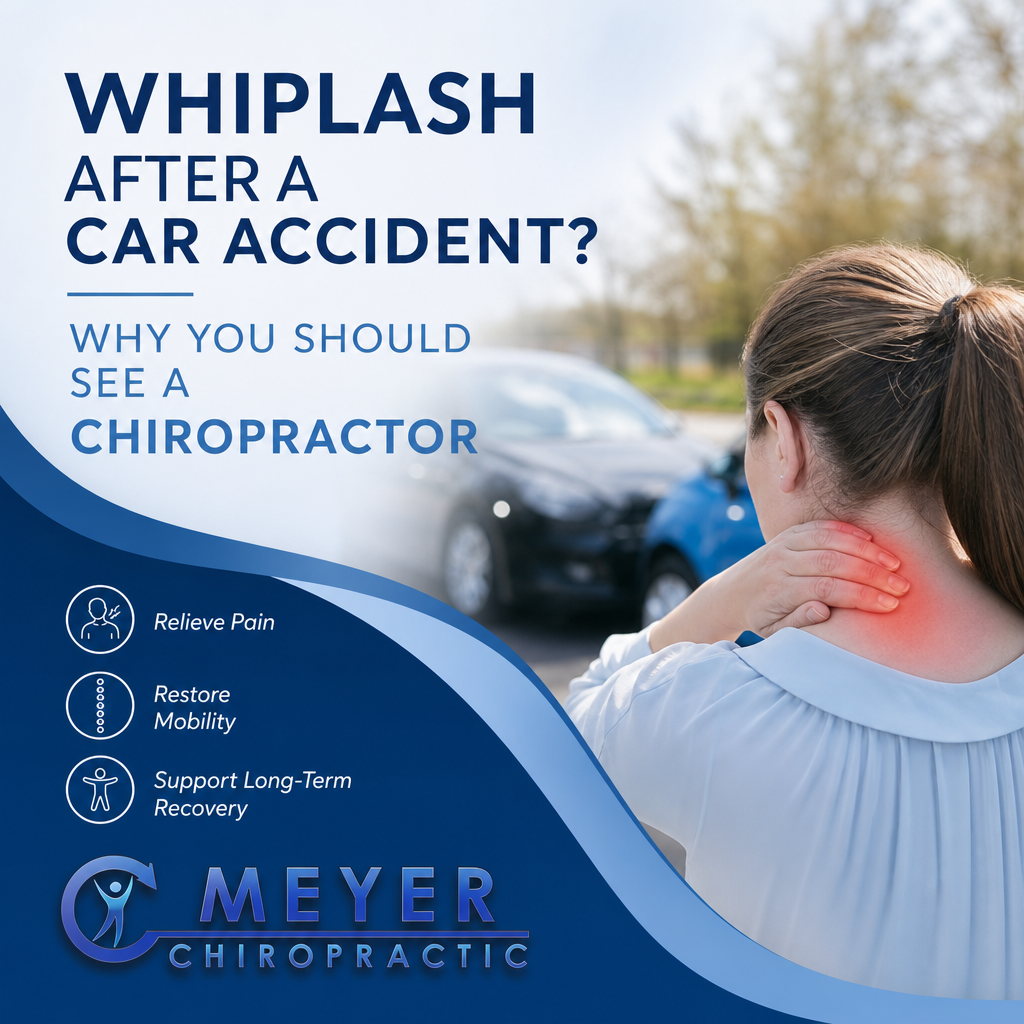

Did your fender bender seem minor, but now you’re wondering whether getting checked after a fender bender could help prevent neck pain, back pain, headaches, or mobility problems later?
A low-speed accident can still place sudden force on your neck, spine, shoulders, and soft tissues. Even if you feel fine right away, symptoms from a fender bender may appear days or weeks later as inflammation builds, muscles tighten, and joints lose normal motion. At Meyer Chiropractic in Southlake, Dr. Robert Meyer helps patients identify the underlying source of discomfort after an auto accident through one-on-one evaluations, digital X-rays when appropriate, and personalized care plans designed to support mobility and recovery.
Fender bender injuries can appear days or weeks later
After a minor collision, adrenaline can temporarily mask pain. Many people get out of the vehicle, check for damage, exchange information, and assume they are okay because nothing hurts immediately. The body’s stress response can make it difficult to notice early signs of auto accident injuries, especially soft tissue strain, joint irritation, or mild whiplash symptoms.
As the body settles over the next several days, stiffness, soreness, headaches, lower back discomfort, or reduced range of motion may begin. This delayed response is common because ligaments, muscles, discs, and spinal joints can become irritated before pain becomes obvious. Getting evaluated early gives your chiropractor a clearer picture of how the accident affected your movement, posture, and spinal health.
Whiplash symptoms after a minor car accident
Whiplash is one of the most common concerns after a fender bender. It happens when the head and neck move rapidly forward and backward, straining muscles, ligaments, and joints in the cervical spine. Even a low-impact crash can create enough force to disrupt normal neck mechanics.
Common signs of whiplash recovery concerns may include:
- Neck pain or stiffness
- Headaches that begin at the base of the skull
- Shoulder or upper back tightness
- Dizziness or fatigue
- Jaw discomfort
- Tingling or numbness into the arms or hands
- Reduced ability to turn the head
Ignoring whiplash symptoms can lead to compensating movement patterns. For example, if turning your neck becomes uncomfortable, you may start rotating through your shoulders or upper back instead. Over time, this can place extra stress on surrounding muscles and joints, making everyday activities such as driving, working at a desk, or sleeping more difficult.
Back pain and spinal misalignment after a fender bender
The lower back can absorb significant force during a rear-end or side-impact collision. Seatbelts help protect you from more serious injury, but the sudden jolt can still affect the lumbar spine, pelvis, hips, and surrounding muscles. Some people notice soreness right away, while others feel tightness after sitting, bending, lifting, or returning to exercise.
At Meyer Chiropractic, a detailed evaluation can help determine whether your pain is related to joint restriction, muscle guarding, disc irritation, posture changes, or another musculoskeletal concern. Chiropractic adjustments may help restore healthier spinal motion when appropriate, while rehabilitation exercises can help retrain movement patterns that were affected by the crash.
If symptoms suggest nerve involvement, such as radiating leg pain, numbness, or weakness, Dr. Meyer may recommend digital X-rays or refer you for additional medical testing when needed. Conservative care is valuable, but the right evaluation comes first.
Headaches and migraines after an auto accident
Headaches after a fender bender should not be dismissed, especially when they begin after neck trauma. The upper neck, shoulder muscles, jaw, and posture all play a role in how tension travels into the head. When spinal joints become restricted or muscles tighten after a collision, headaches can become more frequent or intense.
Not every headache is the same. Some are related to muscle tension, some involve nerve irritation, and others may require medical evaluation. A chiropractic exam can help identify musculoskeletal contributors such as reduced neck motion, trigger points, postural strain, or joint dysfunction. For patients dealing with headache relief or migraine-related concerns, Meyer Chiropractic focuses on finding patterns that may be contributing to symptoms instead of simply masking discomfort.
Care may include gentle chiropractic treatment, soft tissue work, posture correction, mobility exercises, and recommendations for sleeping position, desk setup, and phone use. These everyday factors often influence how quickly the neck and upper back recover after an accident.
Digital X-rays and thorough evaluation after a collision
A professional evaluation after a fender bender is not just about checking where it hurts. It is about understanding how the accident affected your alignment, range of motion, muscle balance, and overall function. Dr. Robert Meyer brings more than 20 years of chiropractic experience to each patient assessment, taking time to listen, examine, and recommend care based on your specific condition.
Digital X-rays may be recommended when there is concern about spinal alignment, degeneration, structural changes, or trauma-related findings. Not every patient needs imaging, but when it is appropriate, X-rays can provide useful information for building a safer, more personalized treatment plan.
Your care plan may include auto accident injury recovery services such as chiropractic adjustments, spinal decompression therapy, massage therapy, rehabilitation exercises, posture correction, and home care guidance. The goal is to help your body regain better movement and function while reducing stress on irritated tissues.
Conservative care, treatment timelines, and what recovery may look like
Most patients want to know how long they will hurt, when they can return to normal activity, and whether chiropractic care can help them avoid medications or invasive procedures. Recovery depends on several factors, including the direction of impact, prior injuries, posture, age, activity level, job demands, and how soon the injury is evaluated.
Some patients improve with a short course of care focused on reducing stiffness and restoring movement. Others need a longer plan that includes spinal decompression therapy, massage therapy, strengthening exercises, and mobility work. If you sit at a desk, drive often, lift for work, play sports, or care for young children, your plan may also address the daily habits that place repeated stress on your spine.
Choosing the right chiropractor after a fender bender matters. Look for a provider who performs a thorough evaluation, explains findings clearly, uses conservative treatment options, and adjusts the plan based on your progress. At Meyer Chiropractic, patients are not treated with a one-size-fits-all approach. Care is designed to support pain reduction, better movement, improved posture, and a safer return to daily activities.
Get the help you need after a fender bender in Southlake
Get the help you need if you were recently involved in a fender bender, even if your symptoms seem minor. Early evaluation can help identify hidden neck, back, and soft tissue injuries before they disrupt your work, sleep, exercise, or family routine.
Meyer Chiropractic serves Southlake, Grapevine, Colleyville, Keller, Trophy Club, and the surrounding DFW area with personalized chiropractic care for auto accident injuries, whiplash, headaches, neck pain, and back pain. Dr. Robert Meyer focuses on the underlying cause of discomfort and uses conservative treatment options to help patients restore mobility and return to normal daily life. If you feel stiff, sore, or simply unsure after a collision, schedule an evaluation with Meyer Chiropractic and take the next step toward feeling and moving better.